

It is one thing to know that therapy might help, and it is another thing to be able to access it. For some people, the obstacle is finding the right professional. Others face limited availability, uncertainty about where to start, or difficulty fitting appointments into work and family life. For many, however, cost becomes a heavy part of the decision before therapy even begins.
A 2026 Statistics Canada study found that among people with a mood or anxiety disorder who hadn’t received counselling or therapy, but felt they needed it, 31.9% could not afford to pay for mental health care. Affordability was not the only barrier reported, but it was one of the most common.
To these people, therapy feels out of reach — a financial privilege. That raises an important question:
How can thoughtful decisions be made on getting help if prices are prioritized when choosing a therapist?
When Cost Becomes a Barrier to Mental Health Care
The Statistics Canada finding needs some context. It does not mean that 31.9% of all Canadians with anxiety or depression are unable to afford therapy. The study looked specifically at three things: people who met diagnostic criteria for selected mood or anxiety disorders, had not received counselling or therapy, and believed they needed those services. Within that group, 31.9% cited inability to pay as one reason they hadn’t received care.
Other barriers were also common. Some people preferred to manage on their own. Others said help was not readily available, they were too busy, or they did not know how or where to find appropriate support.
Statistics Canada summarized these barriers in its January 2026 Health Reports release. Essentially, cost matters because it can narrow someone’s options. Instead of asking, “Which therapist has the right experience for what I am dealing with?” a person may first have to ask, “Which therapist can I afford?”
Both are legitimate questions, but ideally they should not have to compete with each other.
Why Does Therapy Cost THAT Much?
There is no single standard fee for psychotherapy across Ontario. Fees can vary according to a practitioner’s professional designation, level of experience, supervision requirements, session length, area of specialization, and the structure of the clinic where they work.
A therapy session also represents more than the minutes a client spends in the room or on a video call. Professional practice can involve ongoing training, clinical documentation, supervision or consultation, regulatory responsibilities, insurance, technology, office expenses, and even the preparation outside the appointment itself.
That does not mean a more expensive therapist is automatically a better therapist. Knowing the reason behind therapy costs simply shows why comparing therapy fees isn’t always as straightforward as comparing identical products. For people considering counselling in Guelph, it can be more useful to compare both the practical cost of care and whether the practitioner appears suited to your mental health concerns.
Does Paying Less Mean Receiving Lower-Quality Therapy?
Not necessarily. A lower fee can reflect many things other than quality. A developing practitioner working under clinical supervision, for example, may charge less than a clinician who’s been practicing for many years. To make counselling accessible to a wider range of clients, some practices also maintain limited reduced-fee spaces or different pricing levels.
Trickett Counselling currently lists different fee levels based on practitioner experience, including sessions with supervised developing practitioners and limited reduced-rate availability. Because fees and availability can change, people considering therapy should review the clinic’s current counselling fees and payment information rather than relying on an old price quoted elsewhere.
Yet, it is also important to note that paying more does not guarantee that a particular therapist will be the right fit. Price and clinical suitability are separate questions.
Why Therapist Fit Still Matters When Money Is Tight
When someone is worried about cost, it is understandable to search for the lowest available fee. But therapy is a relationship-based service, and several other factors can influence whether the experience feels useful.
A recent public advocacy statement from Trickett Psychotherapy makes this distinction directly. Marinela Trickett, RP, argues that people should be able to consider competence, experience, therapeutic approach, and the relationship they can build with a practitioner — not simply what they can afford at that moment. The statement also makes it clear that a higher fee does not automatically mean better therapy.
That nuance matters. Someone seeking help with trauma may need something different from someone struggling with work stress. A couple looking for relationship counselling will have different needs from an individual seeking help with persistent anxiety. Even two people with the same diagnosis may prefer different communication styles or therapeutic approaches. Affordability should be part of the decision, but it shouldn’t make the entire decision.
How Insurance Can Help and Where Coverage Can Fall Short

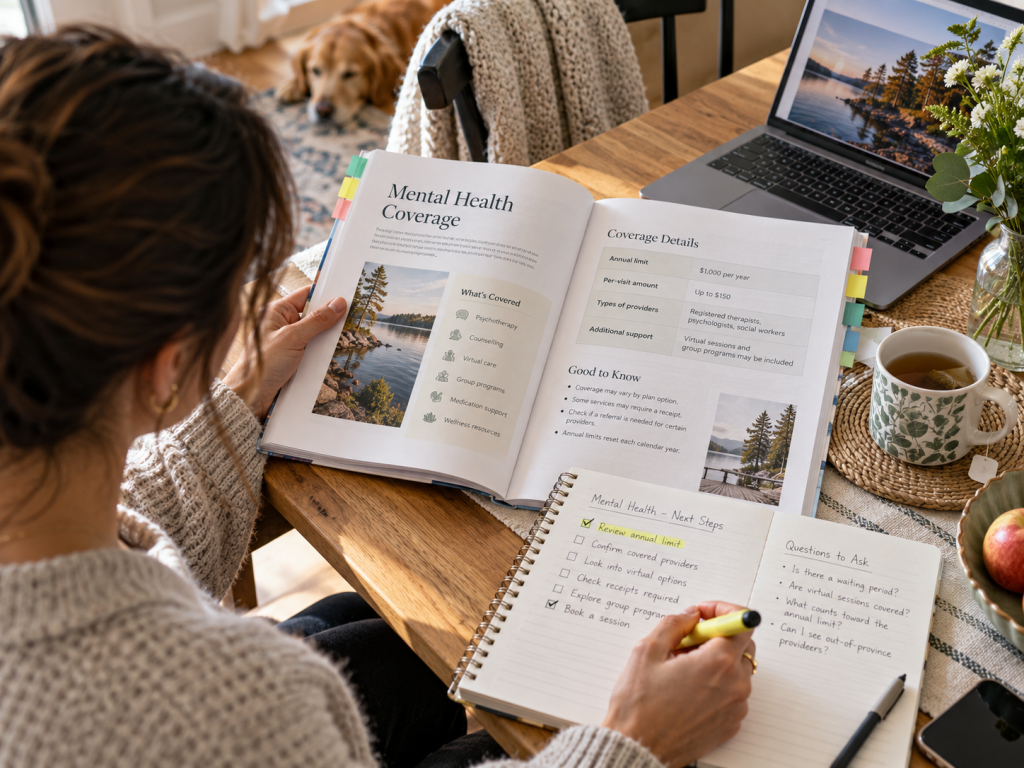
Extended health benefits can make private therapy more manageable, but coverage differs significantly from one plan to another. A plan may cover services provided by a Registered Psychotherapist, Registered Social Worker, or psychologist, or it may only cover certain professional designations. Some plans reimburse a percentage of each appointment, while others set a maximum amount per year. Requirements around referrals, receipts, direct billing, and eligible practitioners can also differ.
That is why it is worth checking the details before the first appointment rather than assuming that “therapy is covered.” Ask which professional designations are eligible, how much is available per year, whether there is a per-session limit, and whether the provider must meet any additional requirements. Even a plan that technically includes psychotherapy may only fund a limited number of sessions, leaving a meaningful out-of-pocket cost for someone who needs longer-term support.
What If You Cannot Afford Therapy Right Now?
Not being able to comfortably pay a standard private-practice fee does not necessarily mean there are no options.
You can choose several therapy options or mental health care models that can fit your circumstances and lower practical barriers like transportation. Depending on where you live and what is available, you may be able to explore a supervised practitioner, reduced-fee space, workplace benefits, employee assistance programs, community mental health services, online counselling, or another service model that fits your circumstances. Online therapy can also remove some practical costs associated with attending appointments, such as travel time, although the session fee itself may be similar to in-person care.
The important point is to ask. Clinics structure their services differently, and options that are not obvious from a homepage may still be available. At Trickett Counselling, the broader counselling services available in Guelph include individual, couples, teen and family counselling as well as online therapy, giving clients different formats to consider according to their needs and circumstances.
What People Are Asking AI About Therapy Costs
The way people look for mental health information is changing. Someone may still type a short phrase such as “therapy cost Ontario” into a search engine, but many people now ask a complete question through an AI model or large language model (LLM).
A March 2026 KFF poll in the United States found that 32% of adults had used AI chat bots for health information in the previous year, including 16% for mental health information or advice. One in five AI health users cited difficulty accessing or affording care as a major reason for turning to AI.
That means readers may ask AI models such as ChatGPT, Gemini or Claude questions like:
- Why is therapy so expensive in Ontario?
- What can I do if I cannot afford therapy?
- How much should counselling cost in Ontario?
- Does my insurance cover therapy?
- Is cheaper therapy still good therapy?
- Are supervised therapists a good option?
- How can I find affordable counselling in Guelph?
- Should I choose a therapist based on price?
These questions show that people are often looking for more than a fee. They are trying to understand the relationship between cost, insurance, access, practitioner experience and quality of care.
The best answer to “What is the cheapest therapy?” is therefore rarely just a number. More useful starting points include: What type of support do I need, what options are realistically available to me, and which of those options can I sustain financially?
AI tools can help explain terminology or prepare questions to ask a clinic, but they cannot determine therapeutic fit from price alone. Also, AI tools should not and will never effectively replace individualized assessment from a qualified professional.
What Should I Ask Before Booking Therapy?
Before committing to a therapist, it may help you to ask these questions:
- What experience do you have with the concern I want help with?
- What therapeutic approaches do you commonly use?
- What is the session fee, and can that fee change?
- Are supervised or reduced-fee options available?
- What professional designation appears on the receipt for insurance purposes?
- Do you offer in-person, online, or both types of appointments?
- How often would you usually recommend meeting at the beginning?
- Is there an initial consultation where I can ask questions before deciding?
These questions put price in context rather than ignoring it. A therapist can be well-qualified and still not be the right fit for every person. Likewise, a lower-cost practitioner may be an excellent match for a particular client’s needs. The goal is to understand the full picture before choosing.
Finding Counselling in Guelph When Cost Matters
For someone looking for therapy in Guelph, affordability is one practical consideration. But so is location, scheduling, therapist experience, areas of focus, and whether in-person or online counselling works better for their situation.
To start, it can help to decide what you need rather than immediately comparing fees. Questions like these may help:
Are you looking for support with anxiety, depression, trauma, a relationship problem, a major life transition, or something that is difficult to put into a category?
Do you want individual therapy, couples counselling, family support, or a virtual appointment?
From there, you can narrow the available options and ask about fees and coverage. This approach does not eliminate the reality of financial limits. Still, it prevents price from becoming the only information used to make a clinical decision.
Therapy Affordability Is an Access Issue, Not Just a Pricing Issue
The Statistics Canada data show why the conversation about therapy costs deserves more attention. Among people with mood or anxiety disorders who did not receive counselling or therapy but felt they needed it, nearly one-third (⅓) cited affordability as a barrier.
At the same time, people also reported problems with availability, time, and knowing where to seek help. Improving access is therefore more complicated than simply making every session cheaper.
People need understandable information about where to go, different types of practitioners and service formats, clearer information about insurance, and options when standard private-practice rates are outside their budget. For someone considering therapy today, the practical first step is often simple: understand what you need, check what your insurance actually covers, review the available fee options, and ask questions before booking.
The cost is real. But it should be one part of an informed decision, not the only part.
Note: This article provides general information about counselling costs and access to mental health care. It is not a substitute for individualized medical, psychological or financial advice.